
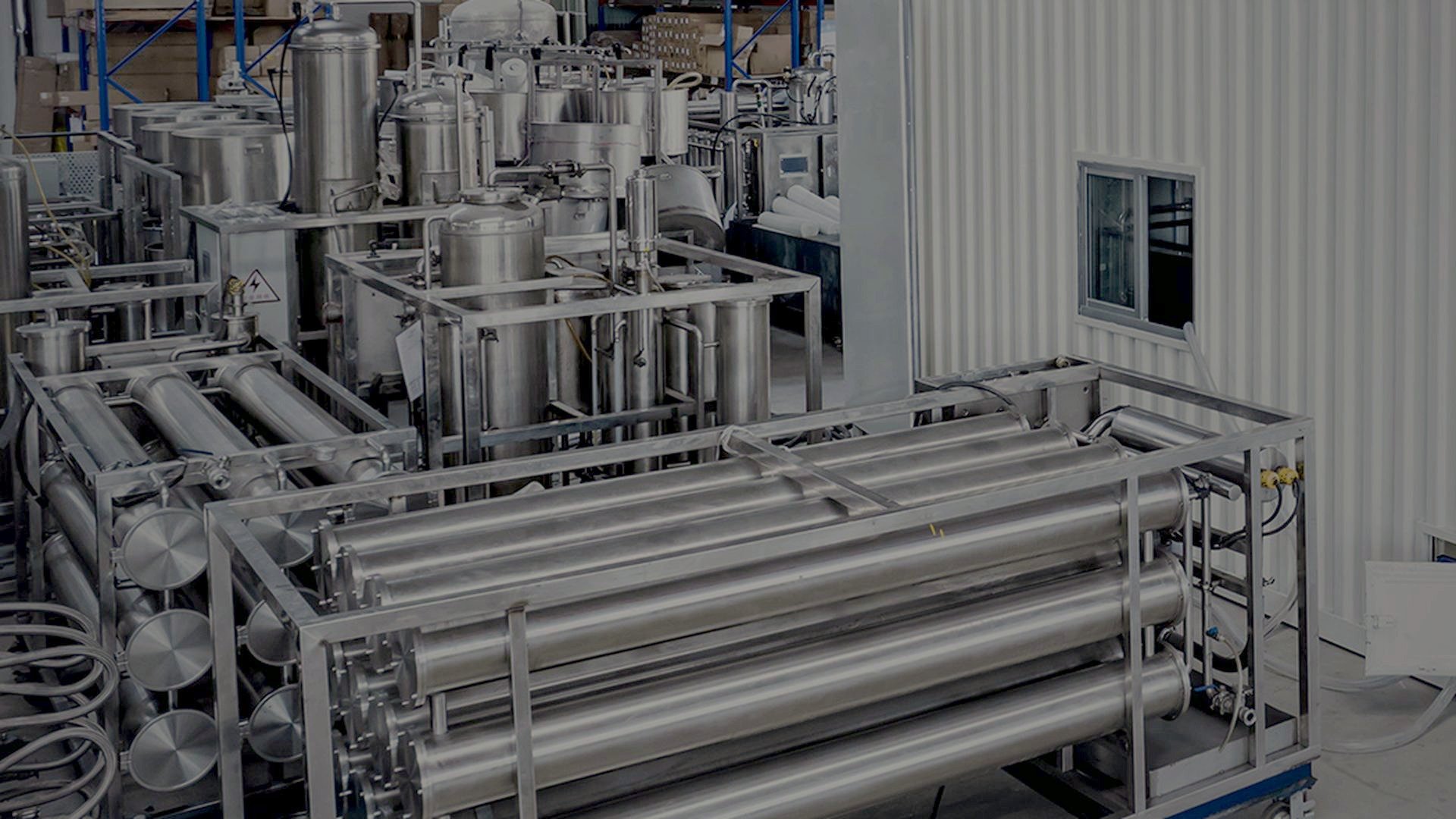
A provincial manufacturing feature published this month traced the development of the nano-screening membrane, and the account is a useful corrective to the way filtration technology is usually described.
The problem, stated plainly
Through the 2010s, demand from steel, petrochemical, tyre and power plants grew faster than the separation technology serving them. Centrifugal separation did what it was designed to do — it took the large particles out — and left the small ones in circulation. Those fines oxidise, agglomerate and plate out on hot surfaces. Oil degrades, galleries clog, failures get more frequent and maintenance costs climb.
The industry answer was to change oil more often. The company's answer was to filter finer.
No precedent to copy
Membrane separation was already working in water treatment. Nobody had applied it to industrial oil. Abroad, a small number of firms held the technology and did not license it. Domestically there was no reference installation to study.
The team began where most development programmes begin — by testing what was available. More than a hundred porous materials, sourced worldwide, went through the bench. None met the requirement.
So they went upstream
Rather than keep searching the catalogue, the company started making the material. That decision set the timeline: five years, with R&D held at roughly 10% of turnover throughout, working through formulation ratios, batch uniformity, high-temperature stability, demulsification, filtration precision and fouling resistance one at a time.
The material that came out of it is a multi-purpose nano-screening purification membrane. Run contaminated oil through it under low-pressure drive and cleanliness moves from NAS 8 to NAS 3 in one pass, with no chemical additives and no secondary waste stream.
What the appraisal said
A provincial technical institution carried out novelty search and appraisal. Its finding: the equipment fills a domestic gap, and the overall technology is rated internationally advanced.
What followed
The membrane platform produced a family rather than a product: high-precision lubricating oil purification systems, mixer oil purification units, fire-resistant fluid ultra-clean units. National major environmental protection technology and equipment listings, national patent-intensive product status and a provincial first-of-a-kind equipment listing followed, along with supply relationships across refining, steel, tyre and lithium battery production.
The lesson in the story is not that a small company beat a large one. It is that the constraint was never the machine — it was the material, and the material had to be invented before anything else could be designed around it.
